



From Search Terms to Robots: Who Is Responsible When a Robot Breaks the Law?


In our earlier post on AI agent responsibility, we looked at who is responsible when a digital AI agent acts on someone’s behalf. This post looks at what comes next: robots that act in the physical world.
To understand where the law may be headed, it helps to look at where it has been.
Where It Started: The Search Term
When Attorney Ron Frey began handling internet and computer crime cases in the early 2000s, many cases turned on what a person received in response to a search query. At the time, that often meant a search on Yahoo.
The pattern was fairly straightforward. A person typed a search term, the search engine returned a list of sites, and the person clicked through to one of them. If illegal material was later found on the computer, that search term became central to the case.
A single search term could be strong evidence for the government, used to argue that the person intended to find what they found. It could also be strong evidence for the defense, showing that where the person ended up was not where they meant to go, and that what ended up on the computer was not something they were looking for.
Then Came Peer-to-Peer Networks
Cases then evolved into peer-to-peer (P2P) cases. Search terms were still involved, but instead of returning links, the search returned files that were downloaded or shared.
P2P networks were generally far riskier than a search engine. Instead of being directed to corporate or trusted websites, users were pulling files directly from strangers who could be anywhere in the world, some of whom were engaged in criminal activity. File names often did not match their contents, and the same questions about intent became even more complicated.
Then Chatbots, Images and Video
Chatbots became widely known and used after ChatGPT was released in late 2022. Now, instead of being directed to content on a website or a P2P network, a person’s prompt is answered by a large language model that generates new content using predictive technology.
The technology quickly moved beyond text. AI systems can now generate images and video as well. As we have discussed in our page on AI chats and prompts as evidence, prompts can play the same role search terms once did, as evidence of intent or as evidence of its absence.
Now: AI Agents That Act
At the time of this writing, in 2026, AI companies are deploying agentic AI systems. A person gives one or more AI agents goals and information, and the agents take steps on their own to accomplish them.
Given access, these agents can handle finances, log into accounts, go through email, and do nearly anything a typical user can do on a computer or cell phone. That raises the question of who is responsible when an agent does something the person did not specifically tell it to do.
Next: Robots in the Physical World
The next step appears clear. It will not just be digital bots, but physical ones. A number of companies are competing to deliver humanoid robots run by artificial intelligence.
Tesla’s Optimus is one of the primary examples. At the time of this writing, Tesla has said its first Optimus production line is designed for an eventual capacity of one million robots a year, and company leaders have spoken of a later factory aimed at far higher volumes. It is apparent that the amount of funding, resources and energy being put into the development of these robots is substantial, and on a long enough timeline it seems apparent that there will be wide release and adoption in some form.
Now imagine directing not one digital agent, but several humanoid robots that do not get tired, are highly capable, and act in the real world at your direction. The legal questions will be voluminous.
In some ways, agentic AI can already be seen in the real world. Tesla’s Full Self-Driving (Supervised) vehicles, and the unsupervised self-driving vehicles now operating in some cities, take a goal, such as a destination, and make their own driving decisions to reach it. (Attorney Ron Frey has written about Tesla Autopilot, autonomous vehicles and the law on FreyLegal.com.)
A World Full of Robots
Consider how people once looked out a window and saw no cars. Decades later, it is hard to look outside and not see countless cars.
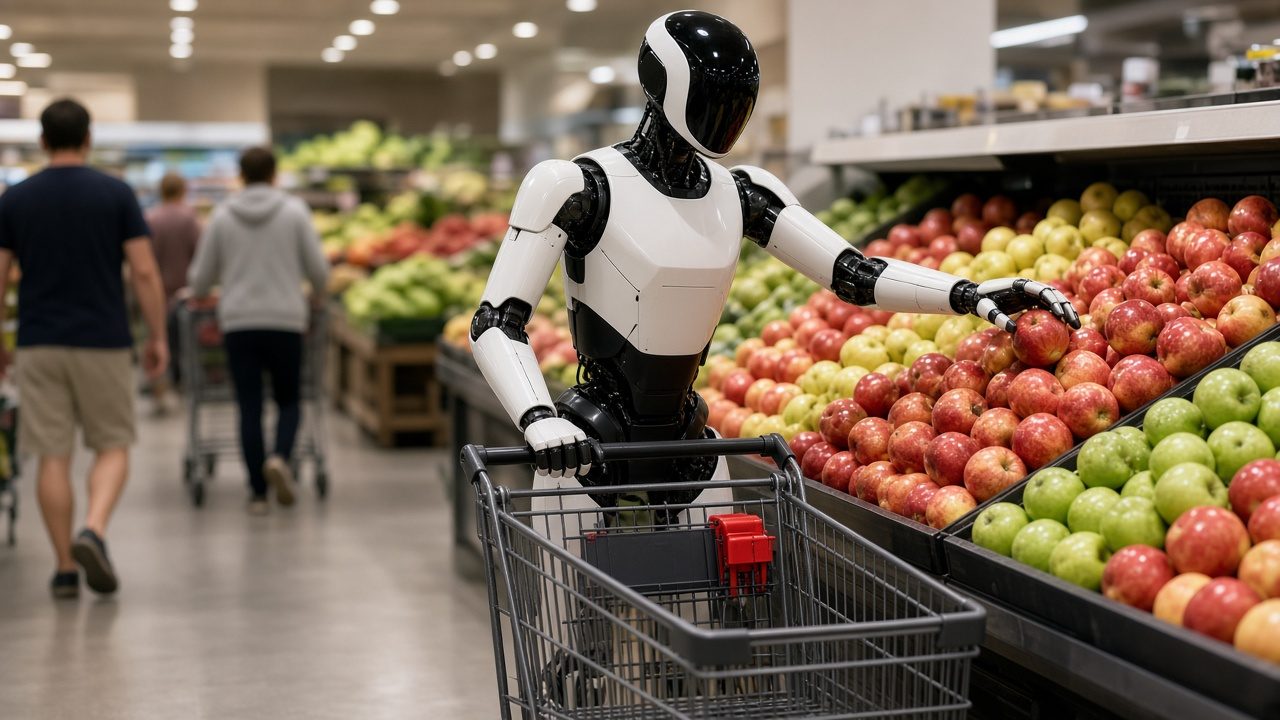
If the predictions about robots come even remotely true, the same may happen again. People could see robots working in stores, shopping for people, accompanying people, and walking down the street.
“When I started, a single search term could decide a case. Then it was a file name, then a prompt. If robots are acting on someone’s instructions, those instructions are likely going to be the evidence. The question is whether the law will understand what the person actually intended and what the machine decided on its own.”
Who Is Responsible When a Robot Does Wrong?
The core questions are simple to ask and hard to answer:
- Civil responsibility. If a robot causes property damage or injury, who pays: the owner, the person who gave the instruction, the manufacturer, or the software developer?
- Criminal responsibility. If a robot does something that would be a crime if a person did it, who, if anyone, can be charged?
- Intent. Criminal law generally requires a guilty mind. A robot that interprets a goal in an unexpected way raises the same problems we discussed with AI agents, now with physical consequences.
Just as search terms and prompts are used against people today, the instructions given to a robot would likely be used the same way, assuming the same laws are applied. Robot logs, app commands, voice instructions and sensor data could all become evidence, much like the records discussed in our post on how police get AI records. Cars already raise similar questions today, as discussed in our post on Tesla Sentry Mode recordings as evidence.
As part of a defense strategy, it is generally important to review what the person actually instructed, what the system did on its own, what the person could have known or foreseen, and whether the records are complete and accurately interpreted.
Insurance, Safety Rules and the Law Ahead
Attorney Ron Frey expects that a complex web of insurance requirements, safety standards, and other measures will be put in place as robots spread. At the time of this writing, the law has generally not caught up, and existing criminal and civil laws were written with human actors in mind.
As always, laws are subject to change and revision, so contact Attorney Ron Frey to discuss the details of your case and the current status of the law.
Talk With Attorney Ron Frey About Your Case
If you are being investigated or have been charged in a case involving AI, an AI agent, or other technology, contact The Frey Law Firm for a free and confidential consultation. We can meet by phone, by video, or at our Tampa office, and we can come to you when the situation calls for it.
Call or text (844) 766-3739. Rapid response, 24/7.
This post is for general informational purposes only and is not legal advice. Reading it does not create an attorney-client relationship.
Laws change frequently, and the information in this post may not reflect the current status of the law at the time you read it.