



Account Suspended or Closed? What a Terms of Service Notice Can Mean


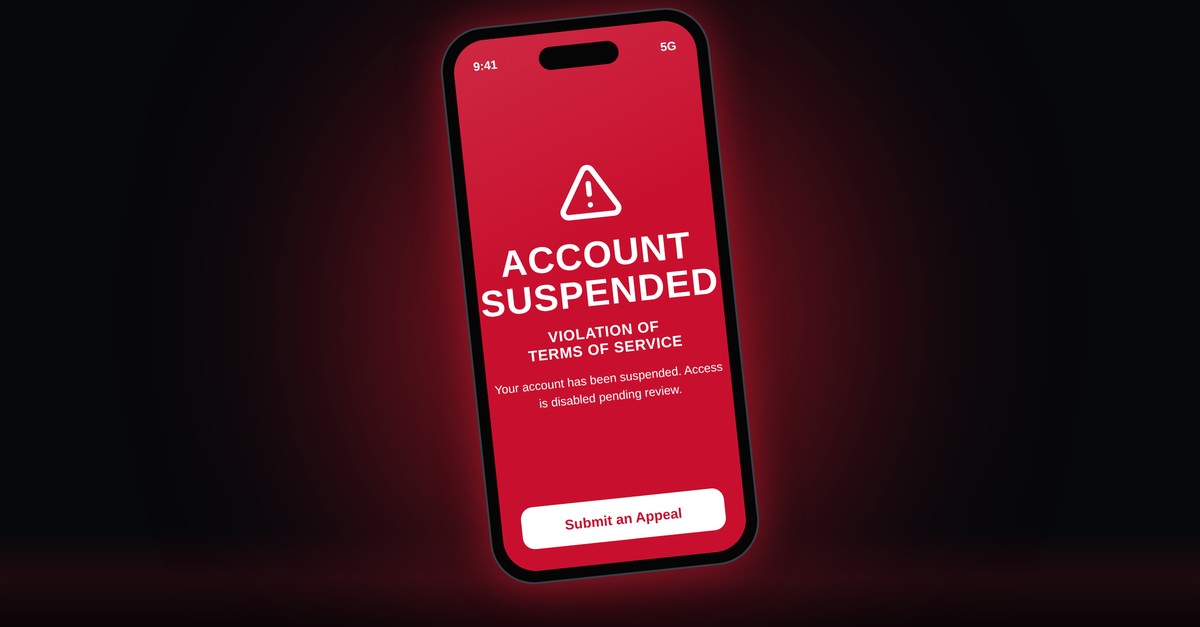
You open your email or app and see a notice: your account has been suspended, disabled, or closed for an alleged violation of the terms of service. It can happen with cloud storage and email services like Google Drive, Gmail, and Dropbox, with social media platforms like Facebook, Instagram, and Snapchat, with payment apps like Cash App and Venmo, and now with artificial intelligence and superintelligence platforms like ChatGPT, Google Gemini, and Claude.
Many people search phrases like “Google closed my account,” “Dropbox closed my account,” or “my AI account was banned” and find little explanation. Attorney Ron Frey of The Frey Law Firm, LLC explains what these notices can mean, why some may connect to a criminal investigation, and why it matters to understand your rights.
Why Accounts Get Closed
Online services close or suspend accounts for many reasons. Sometimes it is simply a mistake by the company. Automated systems scan huge amounts of content and activity, and they can flag something innocent. A shared device, a hacked login, or a file someone else sent you can also trigger a flag. Other times, the company believes the account holder actually violated its terms of service.
A closure notice usually says little about what the company saw or why it acted. That can leave you unsure whether it was an error, a policy dispute, or something more serious.
When a Terms of Service Violation May Also Be a Crime
Most terms of service violations are only a business matter between you and the company. But if the alleged conduct or activity would also be a crime, the company may pass the information to law enforcement as a tip.
That’s true of financial companies, including payment apps like Cash App and Venmo. It’s true of social media companies like Facebook, Instagram, X, and Snapchat. And it’s true of artificial intelligence and superintelligence companies, including those behind ChatGPT, Google Gemini, and Claude. Many of these companies say in their policies that they may share account information with authorities, and some are legally required to report certain kinds of content.
An account closure doesn’t mean a criminal case is coming. But in some situations, the closure and a report to police can come from the same flagged activity.
What Can Happen After a Tip
When a company sends a tip, law enforcement may start an investigation. Investigators might ask the company for more account records, seek a search warrant for the account or for devices, or contact the account holder directly. Sometimes the first sign of an investigation is a phone call from a detective or officers at the door.
Each case moves differently. Some tips go nowhere, and others lead to charges. Every situation must be evaluated case by case under current laws and regulations, with a response tailored to the facts.
Protecting Your Rights
If you got a notice that your account was suspended or closed for an alleged terms of service violation, and you think you might be under a criminal investigation because of it, it’s important to understand your rights. You have the right to remain silent, including if police call or come to your door. Every situation is unique, and contacting an attorney is a priority to get tailored advice.
Don’t rely on what the internet or AI tells you about your situation. The laws and facts that matter are specific to you, and a general article, including this one, can’t replace advice from an attorney who knows your case.
Talk to an Attorney First
Attorney Ron Frey has practiced law for over two decades and focuses on internet and computer crime defense nationally. If your account was closed or suspended and you’re worried it could lead to a criminal investigation, call before you talk to investigators or the company about it.
Attorney Ron Frey Is Available for a Free Initial Consultation: Call or Text (844) 766-3739. In Florida, call (813) 775-2276.